Documentaries
Welcome to the Rat Temple
The Karni Mata Temple, in Deshnok (Rajasthan, India ), is one of the most surprising sacred places in the world. It is home to more than 25,000 rats, considered the reincarnation of the followers of the goddess Karni Mata. The devotees walk barefoot among them as a symbol of respect and blessing, remembering that every form of life deserves to be protected.
more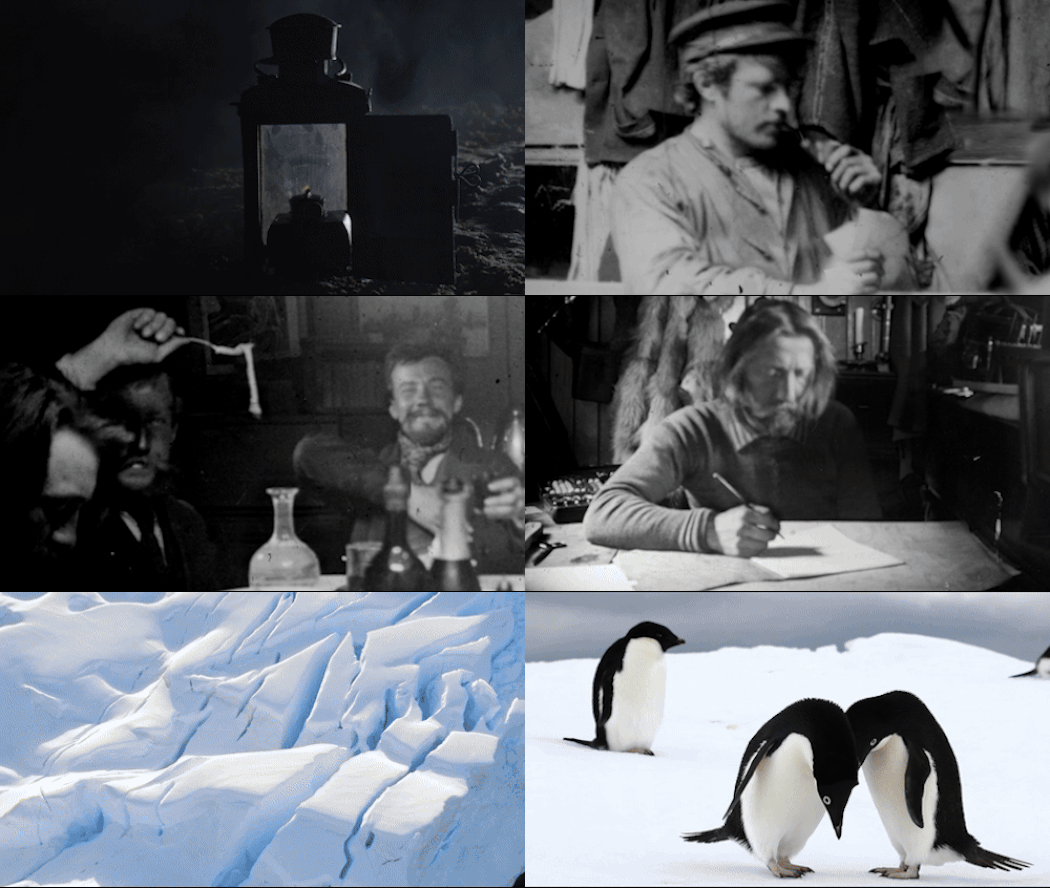
The Belgica
The Belgian Antarctic Expedition of 1897–1899 was the first expedition to winter in the Antarctic region. Led by Adrien de Gerlache de Gomery aboard the RV Belgica, it was the first Belgian Antarctic expedition and is considered the first expedition of the Heroic Age of Antarctic Exploration. Among its members were Frederick Cook and Roald Amundsen, explorers who would later attempt the respective conquests of the North Pole.
The Belgica expedition, led by Adrien de Gerlache, was the first to overwinter in Antarctica (1897-1899). It was a groundbreaking scientific voyage that charted new lands and oceans, while also facing extreme conditions and chal-lenges. The expedition is considered the first of the Heroic Age of Antarctic Exploration.
First wintering in Antarctica:
more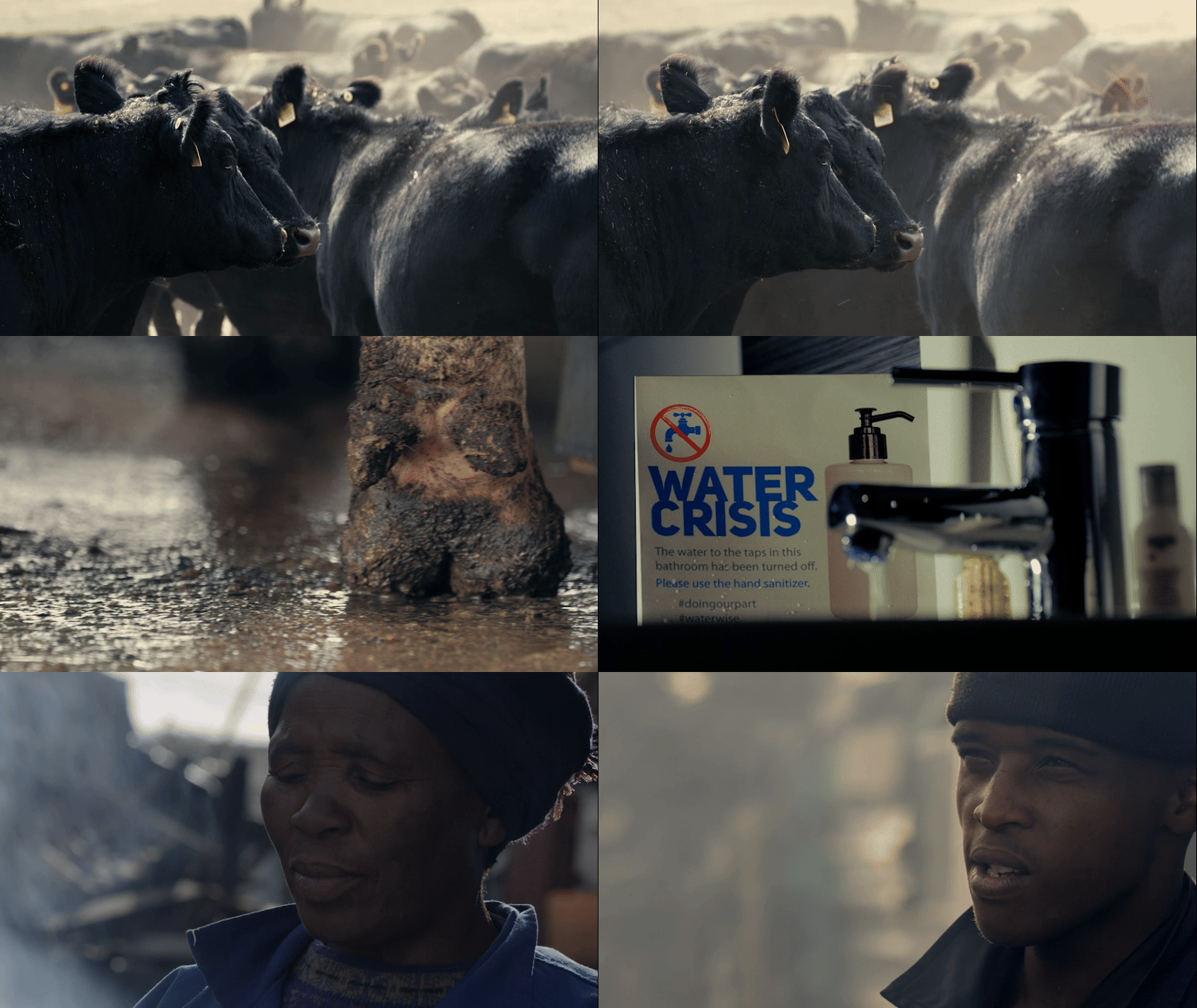
Day Zero
The Cape Town Water Crisis
With:
Alan Winde Western Cape Provincial Minister of Economic Opportunities Ian Douglas Neilson Deputy Mayor of Cape Town Sheikh Abduragmaan Alexander Religious Minister at Masjidul-Quds Chantelle Albury scenario strategist and bestselling author
"Day Zero"—a phrase that typically signifies the final moment in a countdown—has long belonged to the realm of science fiction, often associated with dystopian futures and apocalyptic collapse. But in early 2018, this abstract concept became an imminent reality for Cape Town, South Africa—a modern metropolis of over four million people.
For the first time in modern history, a major city faced the possibility of its municipal water supply running dry. If Day Zero arrived, taps across the city would be turned off. Residents would have to queue at designated collection points under armed guard to receive their daily water rations. Schools, hospitals, businesses—life itself—would be profoundly disrupted.
What was once unimaginable had become terrifyingly real: a city on the verge of complete water depletion. Cape Town’s Day Zero was no longer a warning of things to come. It was a moment poised to redefine how the world thinks about water, resilience, and survival in the age of climate change.
more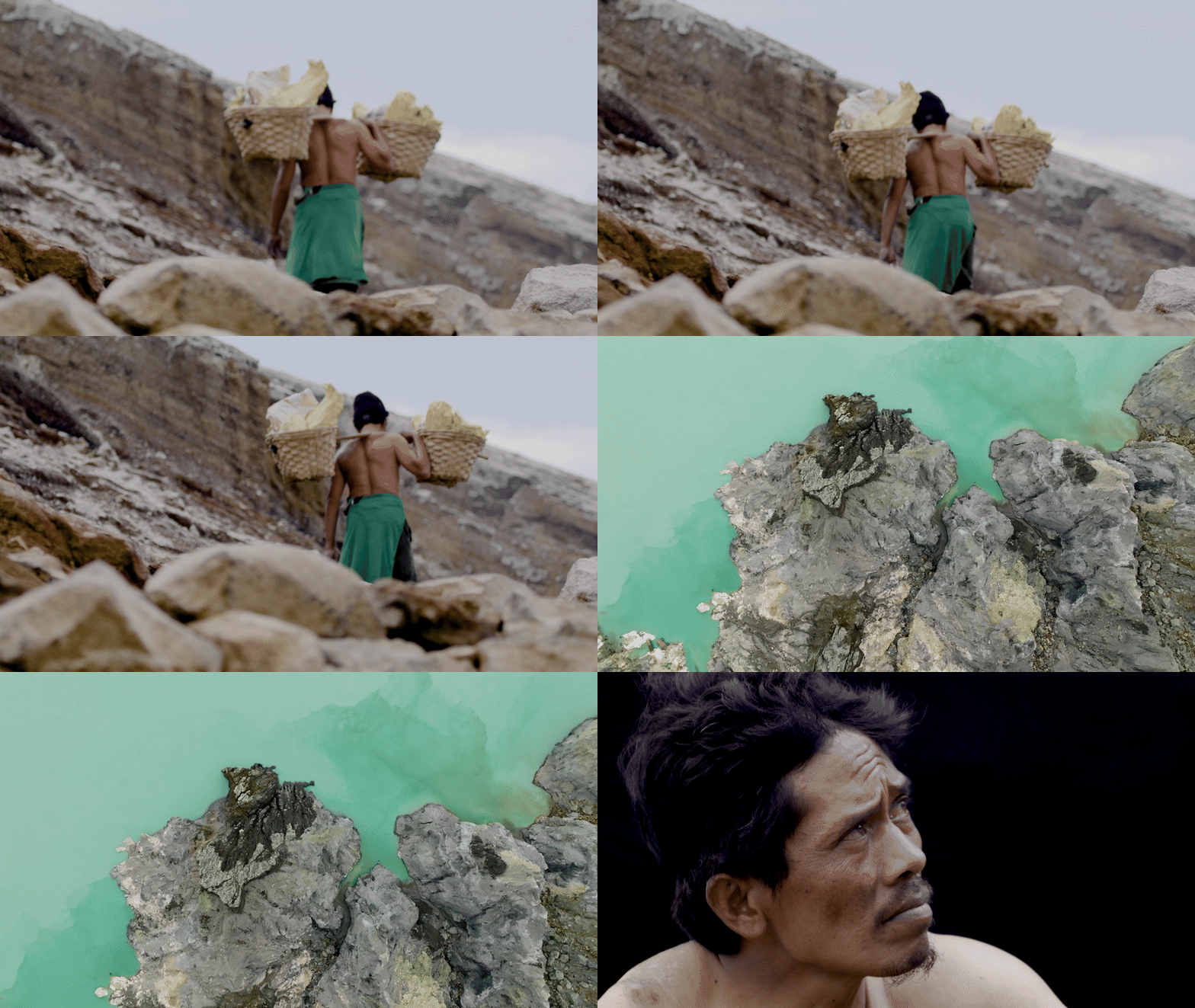
Devil's Gold
For more than 50 years, sulfur mining has shaped daily life at the ljen volcano complex-a chain of composite volcanoes straddling the border of Banyuwangi and Bondowoso Regencies in East Java, Indonesia. This harsh, alien landscape is famed for its surreal blue fire and a highly acidic crater lake, but it's also home to one of the most grueling forms of manual labor on Earth.
Each day, around 300 miners climb over two miles up the steep slopes of Gunung ljen. From there, they descend more than 900 yards into the toxic crater to extract chunks of bright yellow sulfur, known locally as "Devil's Gold." The name reflects both the substance's vivid color and the danger involved in collecting it. Despite the suffocating sulfur dioxide fumes, extreme heat, and lack of protective gear, the miners carry baskets weighing up to 90 kilograms (200 pounds) back up the crater and down the mountain, making multiple trips per day.
The work is physically punishing and hazardous to health. Prolonged exposure to sulfur gas leaves many with respiratory issues, burned skin, and scarred bodies. These miners-some of whom have worked here for decades— bear the visible marks of their labor: poisoned lungs, chemical burns, and backs permanently hunched from the weight they carry. Yet for many, the income is essential in a region where alternative employment is scarce.
moreGalápagos: The Disappearing Eden
The Galápagos Islands, a volcanic archipelago 1,000 km off Ecuador’s coast, are famed for their unique wildlife. Many species found here exist nowhere else on Earth. Charles Darwin’s 1835 visit inspired key ideas in his theory of evolution. Today, climate change and warming waters threaten iconic species like the marine iguana, along with many others.
moreSwitzerland Protects The Alps With A Blanket
High in the heart of the Swiss Alps, where ancient ice has carved valleys for millennia, a quiet ritual unfolds each summer. In the shadow of towering peaks, locals and scientists come together to wrap the Rhône Glacier—one of Switzerland’s most iconic ice masses—in massive white blankets.
The documentary tells the story of an extraordinary act of protection and hope. As climate change accelerates glacial melt across the globe, Switzerland has adopted a surprisingly simple yet symbolic response: covering parts of its glaciers with reflective thermal blankets to slow the loss of ice. The effort is small compared to the scale of the problem, but it speaks volumes.
Following the journey of the community members and glaciologists who trek each year to the melting edge, Switzerland Protects the Alps with a Blanketreveals a nation’s intimate connection with its disappearing glaciers. The film explores the science behind the practice, the challenges of preserving cultural and environmental heritage, and the emotional toll of watching these frozen giants retreat.
At once poetic and urgent, this is a story of human ingenuity, resilience, and the deep love of a people for their mountains.
moreBitter Brew: The Dark Truth Of Kopi Luwak
Synopsis:
Bitter Brew peels back the glossy veneer of the world’s most expensive coffee — Kopi Luwak — to reveal a disturbing reality hidden behind luxury branding and exotic marketing.
Touted as a rare delicacy, Kopi Luwak is made from coffee beans that have passed through the digestive system of the Asian palm civet. But behind this quirky process lies a harrowing tale of animal cruelty, fraudulent practices, and environmental exploitation.
From the dense jungles of Indonesia to high-end cafes across the globe, this eye-opening documentary follows investigative journalists, ethical coffee farmers, and wildlife conservationists as they expose how wild civets are captured, caged, and force-fed in squalid conditions to meet international demand. The film uncovers a shadowy market rife with mislabeling and fake products, where most so-called “wild” kopi luwak is anything but.
Featuring interviews with former kopi luwak farm workers, coffee experts, and activists, Bitter Brew challenges viewers to confront the uncomfortable truths behind a luxury product few question — and asks: Is the price of indulgence worth the cost of cruelty?
more